
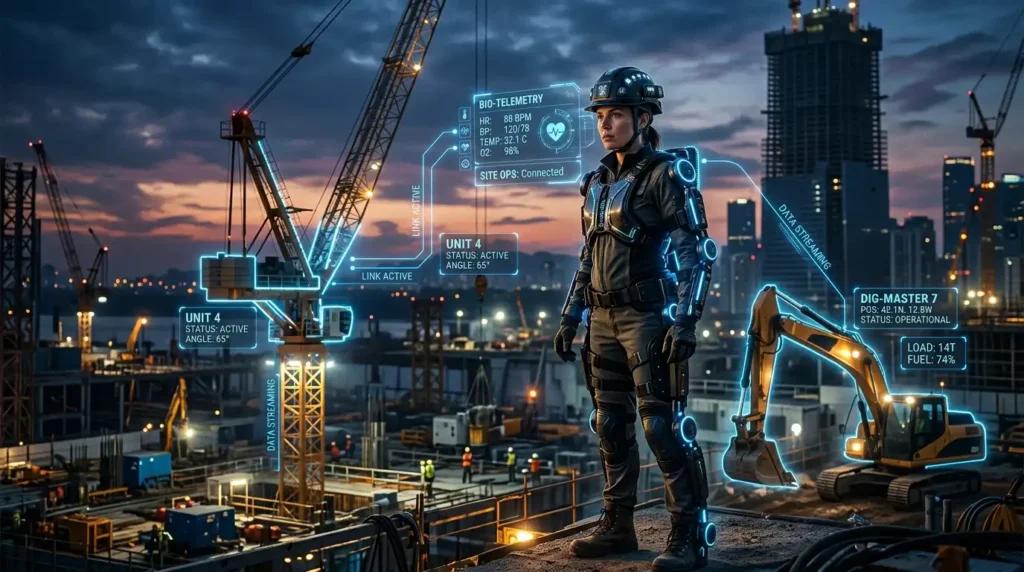
The modern construction jobsite is undergoing a massive digital evolution. Paper checklists and manual safety walkthroughs are quickly being replaced by Internet of Things (IoT) devices, predictive Artificial Intelligence (AI) platforms, and connected wearable technology. From smart hard hats with fall-detection accelerometers to powered exoskeletons and IoT proximity sensors on heavy machinery, contractors are leveraging data to reduce hazards and boost productivity.
While these advancements make jobsites safer, they fundamentally alter the legal landscape when an accident occurs. When smart safety gear fails to trigger a warning, or when predictive AI flags a site hazard that management ignores, who is legally responsible? Unraveling AI wearable liability in construction accidents requires looking beyond traditional workers’ compensation to evaluate product liability, data spoliation, and corporate negligence.
How Wearable Sensors and AI Shift Construction Site Liability
Historically, a workplace injury on a jobsite fell primarily under state workers’ compensation systems, which generally limit an employee’s ability to sue their direct employer. However, the introduction of third-party hardware, algorithm-driven safety software, and continuous data collection creates alternative avenues for legal liability.
When an accident happens on an AI-integrated jobsite, liability can extend to multiple entities:
- Wearable Tech & Sensor Manufacturers: If a smart vest fails to detect a fall or a proximity sensor misses an approaching excavator due to hardware defects or calibration errors, the manufacturer may face strict product liability claims.
- AI Software & Algorithm Developers: Machine-learning safety software that provides false negatives, misinterprets biometric fatigue data, or fails to deliver real-time proximity alerts can expose software developers to product defect claims.
- General Contractors & Subcontractors: Employers and general contractors who mandate wearable devices but fail to properly train workers, ignore system warnings, or fail to act on predictive hazard alerts can be held liable for gross negligence or failure to maintain a safe working environment.
- Equipment Rental Companies & OEMs: Equipment providers who disable or improperly integrate smart sensor suites with heavy machinery can share fault in struck-by incidents.
Predictive Analytics and the “Digital Paper Trail” of Foreseeability
In personal injury and construction law, proving negligence often hinges on proving foreseeability—demonstrating that a site manager or contractor knew or should have known about a dangerous condition before it caused harm.
AI safety software aggregates continuous streams of data from IoT wearables to generate predictive risk scores. For example, if a wearable biometric sensor continuously logs worker heat stress or fatigue, or if proximity badges trigger multiple “near-miss” alerts around a tower crane, the AI system logs these data points in real time.
If a project manager receives these digital warnings but fails to halt operations, adjust shift schedules, or repair faulty gear, that digital record creates an undeniable paper trail of foreseeability. In a court of law, this data can prove that the hazard was not an unforeseen occurrence, but a known risk that was carelessly ignored.
Third-Party Product Liability vs. Workers’ Compensation
Workers’ compensation acts as a no-fault system, providing medical coverage and partial wage replacement to injured workers regardless of who caused the accident. In exchange, workers usually give up the right to sue their employer for ordinary negligence. However, third-party personal injury lawsuits are not restricted by workers’ compensation statutes.
When an injury involves smart safety equipment, an injured worker may pursue a third-party product liability claim alongside their workers’ compensation claim. Product liability claims generally involve three main defect categories:
- Design Defects: The wearable sensor’s software architecture or detection field contained systemic flaws that made it incapable of accurately detecting hazards in dynamic construction environments.
- Manufacturing Defects: A specific batch of sensors, smart helmets, or exoskeleton power joints was defectively manufactured or assembled, leading to hardware failure on the jobsite.
- Failure to Warn (Marketing Defects): The technology provider failed to properly inform the contractor or construction crew of system limitations, battery life constraints, or dead zones in the sensor mesh network.
The Critical Role of Telematics and Digital Evidence Preservation
Following a severe construction accident, wearable sensors and IoT mesh networks hold vital forensic evidence. The digital “black box” of a smart jobsite can reveal exact details about the moments leading up to an impact:
- Second-by-second GPS and spatial location tracking of workers and heavy equipment
- Biomechanical stress data, heart rate metrics, and heat exposure logs
- Impact force, fall distance, and orientation data from smart helmet accelerometers
- System alert transmission logs and timestamped operator overrides
Protecting Data Against Automatic Overwriting: Many enterprise cloud platforms and wearable safety systems automatically overwrite raw sensor logs and telematics after 30 to 90 days to manage data storage costs. To prevent this critical evidence from disappearing, injured workers must work with a personal injury attorney who can immediately issue a formal Spoliation of Evidence Letter to the contractor, software developer, and equipment manufacturer. This legal notice mandates the preservation of all raw sensor data, predictive algorithm models, and communication logs related to the incident.
Regulatory Standards: OSHA and Emerging AI Safety Frameworks
While federal regulations under the Occupational Safety and Health Administration (OSHA) dictate standard Personal Protective Equipment (PPE) requirements—such as traditional hard hats, high-visibility clothing, and fall harnesses—OSHA regulations are continuously adapting to account for smart technology integration.
Deploying smart gear does not excuse an employer from baseline OSHA safety obligations. If a contractor relies on wearable proximity sensors instead of installing physical barriers around trench excavations or high-voltage zones, and the technology fails, the employer remains liable for OSHA violations. Furthermore, under ANSI/ASSP standards, contractors who implement digital safety gear must ensure workers are fully trained on equipment maintenance, charging protocols, and operational limitations.
Steps to Take After an Accident Involving Smart Construction Safety Gear

If you or a loved one is injured on a jobsite where smart safety wearables or AI monitoring systems were in use, take the following steps to protect your health and your legal rights:
- Report the Incident Immediately: Notify your supervisor and ensure the written incident report notes that you were wearing smart safety gear or operating smart equipment at the time of the crash.
- Secure the Wearable Device: Do not tamper with, reset, or return the physical wearable device, smart hard hat, or sensor badge to management without documenting its physical condition, serial number, and power state.
- Seek Immediate Medical Evaluation: Get a comprehensive medical assessment. Medical logs create a clear record connecting the timing of the accident to your physical injuries.
- Identify Equipment & Software Brands: Note the brand names, model numbers, and app software associated with the safety wearables and proximity sensors present on the jobsite.
- Consult a Construction Accident Lawyer: Partner with an experienced legal team capable of issuing evidence preservation demands, auditing complex digital sensor telemetry, and identifying all negligent third parties.
Protecting Your Legal Rights on the Modern Jobsite
As construction technology continues to evolve, holding negligent manufacturers, software developers, and jobsite contractors accountable demands deep legal and technological expertise. If you have been injured in a construction site accident involving wearable sensors, AI safety gear, or heavy equipment malfunctions, contact an experienced construction accident attorney today to evaluate your case and preserve your right to full financial compensation.